
Hastings Old Town Carnival Week
A week of Old Town fun every August: the Pram Race, the Seaboot Race, the bike race down Crown Lane, open houses and gardens, and a carnival procession with fireworks to finish.
For one week every summer, Hastings Old Town throws itself a party. Old Town Carnival Week has been part of the town’s calendar for more than half a century, and it remains unmistakably local: a week of races, walks, concerts, open houses and contests organised by and for the people who live between the East and West Hills, ending with a carnival procession through the streets and fireworks over the sea.

It is a week that rewards wandering. Some events are big set pieces that draw crowds from across Sussex; others are small, eccentric and over in minutes. The best way to enjoy it is to pick up a programme, choose a few things you do not want to miss, and leave time to stumble across the rest.
How it began
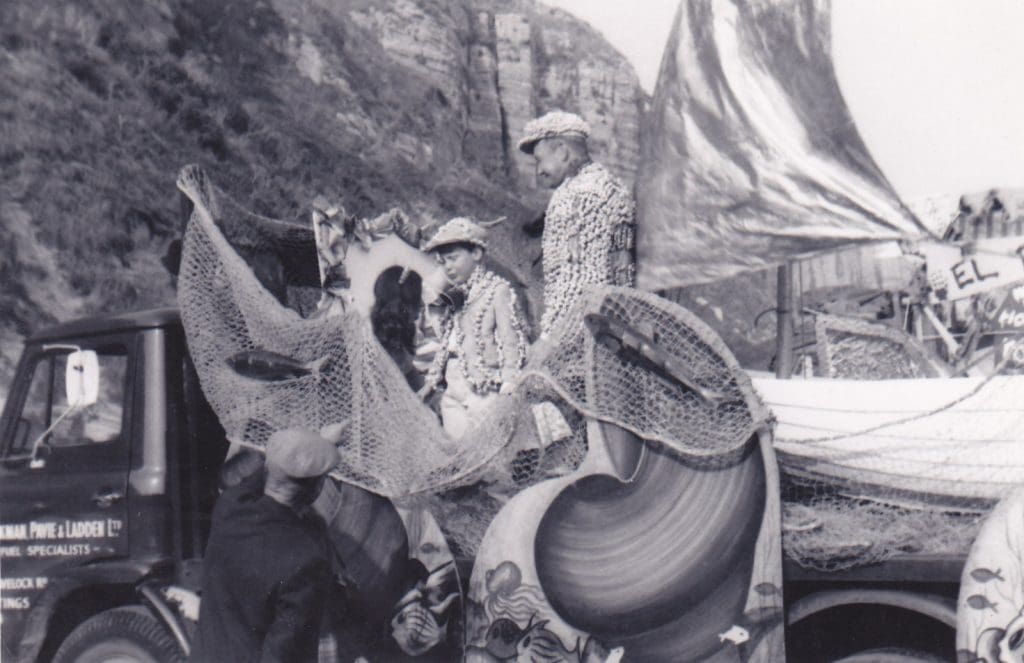
Carnival Week was started in the late 1960s by Old Town residents who felt that the main Hastings carnival had left them out. Rather than complain, they organised a carnival of their own, and the idea stuck. Over the decades the week has grown to fill the first part of August with events, but it has kept the community spirit of its beginnings: it is run by volunteers, much of it is free, and many of the people taking part have done so for generations.

Opening on Winkle Island
The week is traditionally opened on Winkle Island, the small paved space by the fishing beach at the bottom of the High Street, home to the statue of a winkle and to the Hastings Winkle Club, the Old Town charity. From there the week spreads out through the streets, the pubs, the Stade and the beach.
Races like nowhere else
Carnival Week is famous for races that only make sense in Hastings. The Pram Race sees teams in fancy dress pushing decorated prams through the Old Town, usually with stops for refreshment along the way. The Seaboot Race asks runners to tackle the course in fishermen’s boots. The bike race down Crown Lane, one of the Old Town’s steepest streets, is a spectacle best watched from a safe distance. There are usually tug-of-war contests on the Stade too, between pubs, clubs and anyone brave enough to enter.
Open houses, gardens and history
One of the quieter pleasures of the week is the chance to see inside the Old Town. Residents open their houses and gardens, revealing the hidden courtyards and steep terraced gardens behind the narrow street fronts. The Fishermen’s Museum on Rock-a-Nore is open through the week, and past programmes have included guided walks through the historic fishing quarter on the Stade, history walks through the Old Town, twilight walks telling the stories of Hastings’ smugglers, archaeology days, craft fairs and open days at local history houses.
Music and the procession
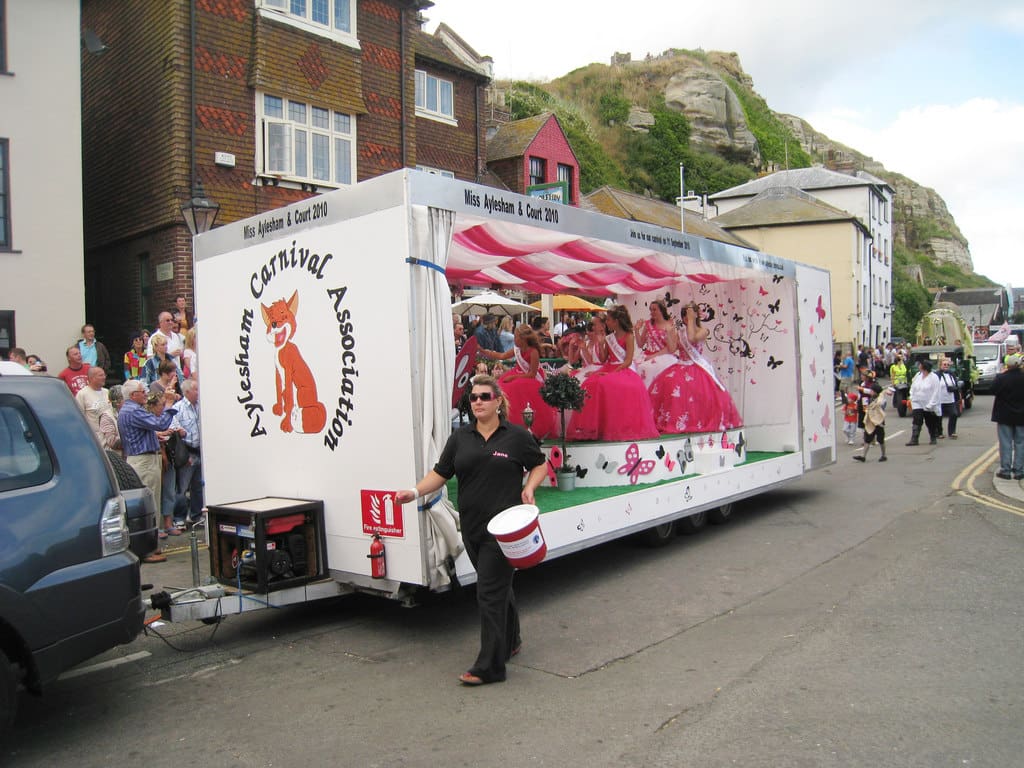
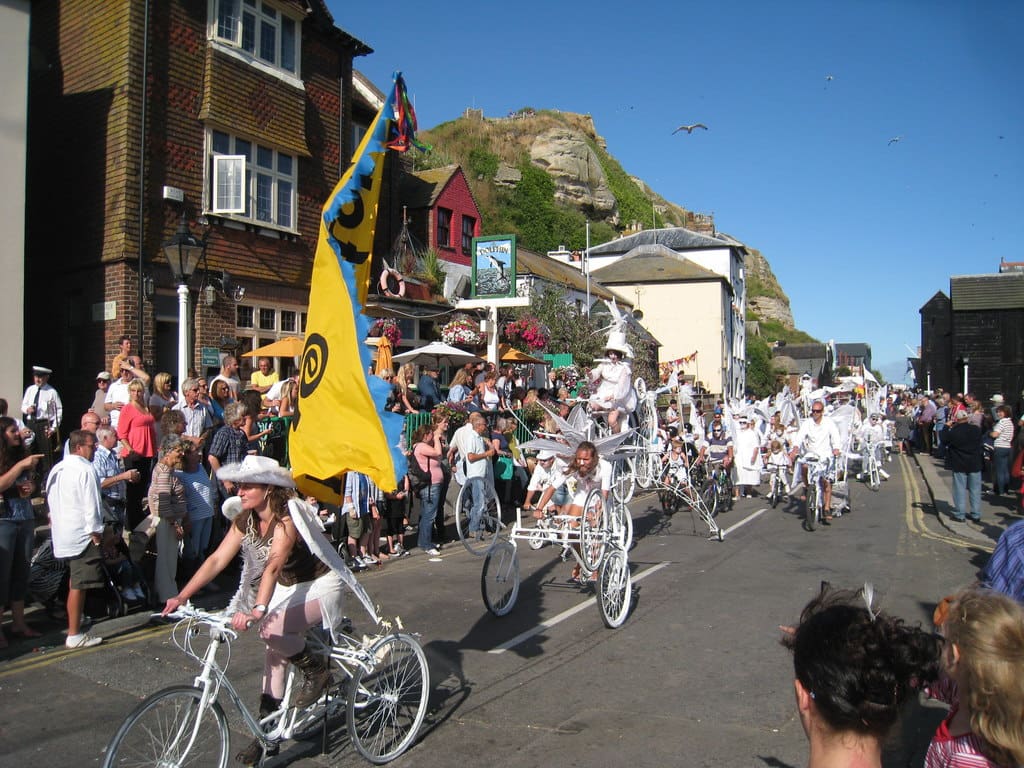
Evenings bring music: concerts on and near the beach, bands in the pubs and gatherings that run late into the summer night. The week builds to the carnival procession, which sets off from the Rock-a-Nore end of the Old Town with decorated floats, dancers, majorettes and marching bands, and makes its way through the streets watched by crowds several deep. Fireworks over the sea close the week in the evening.
Planning your visit
The procession is the busiest moment of the week, so arrive early for a good view and be ready for crowds in the High Street and All Saints Street. The smaller events are often best enjoyed on weekdays, when the Old Town is a little quieter. Times change from year to year, so check the official programme for the week’s events and the procession route.
August by the sea can be hot and sunny or blustery and wet, sometimes on the same day. Bring sun cream and a layer, and wear shoes you can walk in: the Old Town is built on steep slopes, and its twittens, the narrow passageways between streets, are often stepped.
Getting there
Hastings station is about fifteen minutes’ walk from the Old Town along the seafront, with trains from London, Ashford, Brighton and Eastbourne. Parking in the Old Town is scarce at the best of times and roads close for the procession, so travel by train or bus if you can. Access to the seafront and the Stade is mostly on the level; the East Hill Lift, the cliff railway from Rock-a-Nore, is the easy way up to the East Hill when it is running.
With children and dogs
Carnival Week is made for families. Children love the races, the costumes and the procession, and many events are aimed squarely at them. The procession crowds are large and the bands loud, so smaller children may be happier watching from a less crowded corner. Dogs are welcome in much of the Old Town, but the procession and fireworks are best avoided with a nervous dog.
Eating and drinking
Old Town pubs, cafés and fish restaurants are at the heart of the week and very busy, especially on procession day. Fish and chips on the beach by the net huts is the classic Carnival Week supper, and the fishmongers by the Stade sell fish landed on the beach that morning.
This year's programme
As events for the week are announced, they appear in the programme below, grouped by day, with each venue on the map. Follow the links for times and details, and add the ones you want to your calendar. For the full programme, see the official Old Town Carnival Week website.
The programme
All of What's On →The programme will appear here as events are announced.